
The Best Fluffy Pancakes recipe you will fall in love with. Full of tips and tricks to help you make the best pancakes.

What the Community Is Saying: The Digital Burnout Is Real
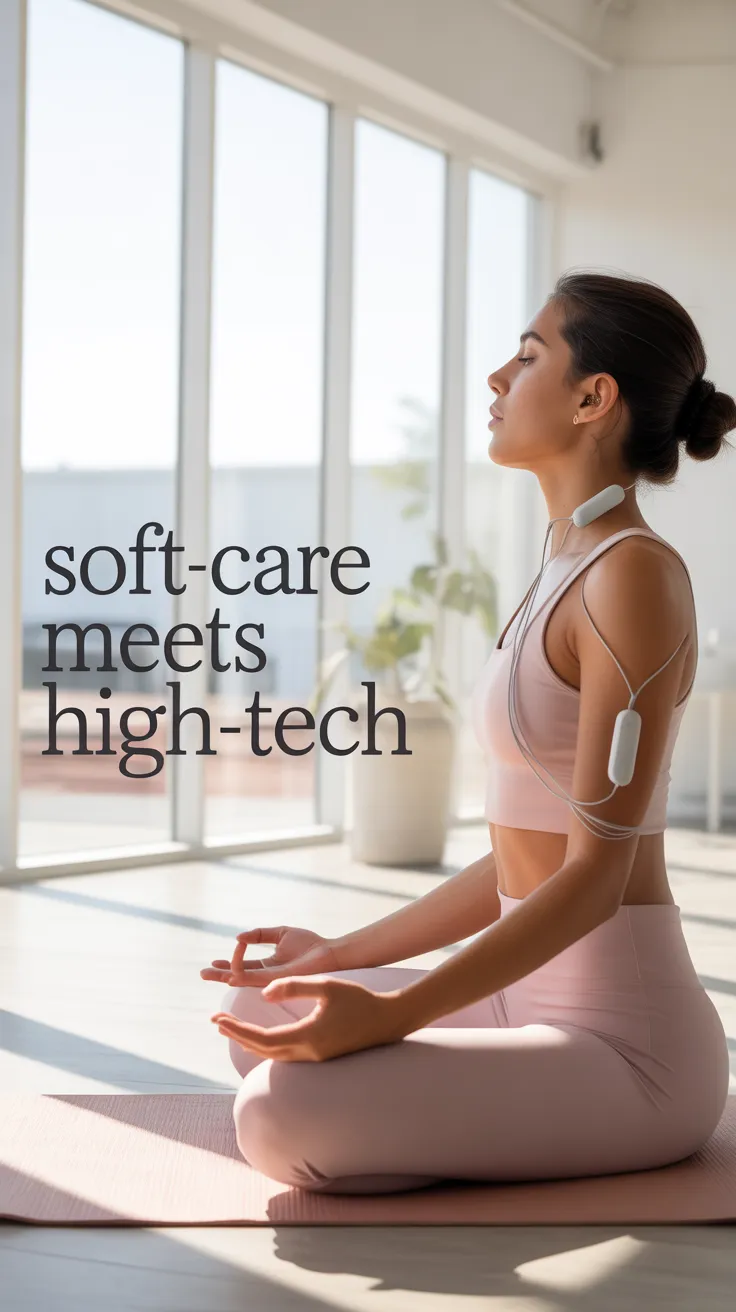
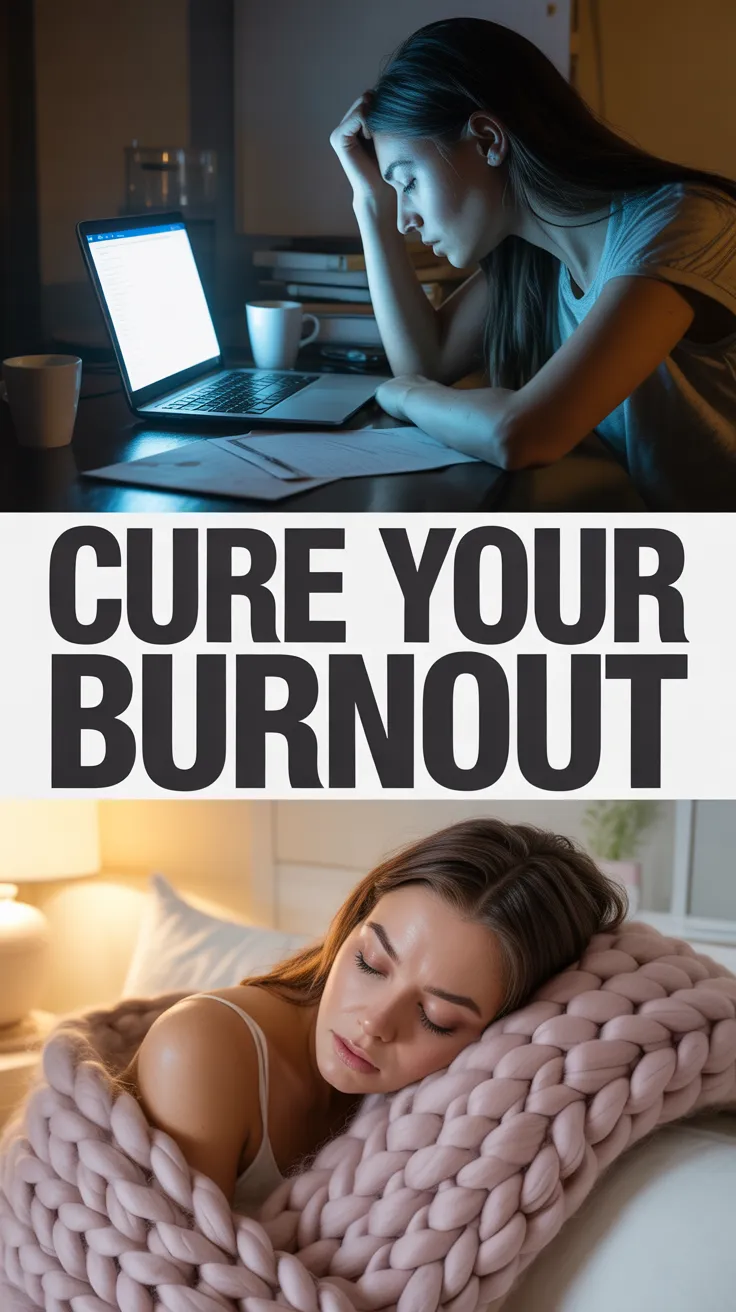
Before we get into the toolkit, let’s be honest about where we are right now—because the data is impossible to ignore, and more importantly, because you have probably felt this in your body.
On Reddit’s r/Anxietysupport, r/digitalminimalism, and r/CPTSD, the same thread keeps going viral in 2025 and into 2026. The title changes, but the feeling is identical: “I’m not depressed. I’m not lazy. I am just completely, utterly exhausted by existing online.” One post with over 14,000 upvotes read: “I put my phone down at 9 PM. By 10 PM I was crying and I didn’t even know why. My nervous system is completely fried.”
That comment thread? Thousands of women between 18 and 34 saying: same.
On Pinterest, the aesthetic tells a different story—the one we’re all quietly building toward. Boards titled “Soft Life Reset,” “Nervous System Era,” and “Biohacking Bestie” are exploding with imagery: ceramic diffusers on marble shelves, pastel acupressure mats on linen floors, close-up shots of wearable neurotech devices resting on collarbones. The dream is clear. We want to feel regulated. We want to feel safe inside our own bodies. And we want it to look beautiful while we get there.
The gap between that Reddit pain and that Pinterest dream? That is exactly where neurowellness lives. And in 2026, the tools to close that gap are finally consumer-accessible, genuinely science-backed, and—yes—completely aesthetic.
This article is your complete guide. We are going deep on the tech, the science, the soft-care anchors, and the exact products to add to your cart today.
I. The Neurowellness Revolution: Why Your Nervous System Is the New Fitness Frontier
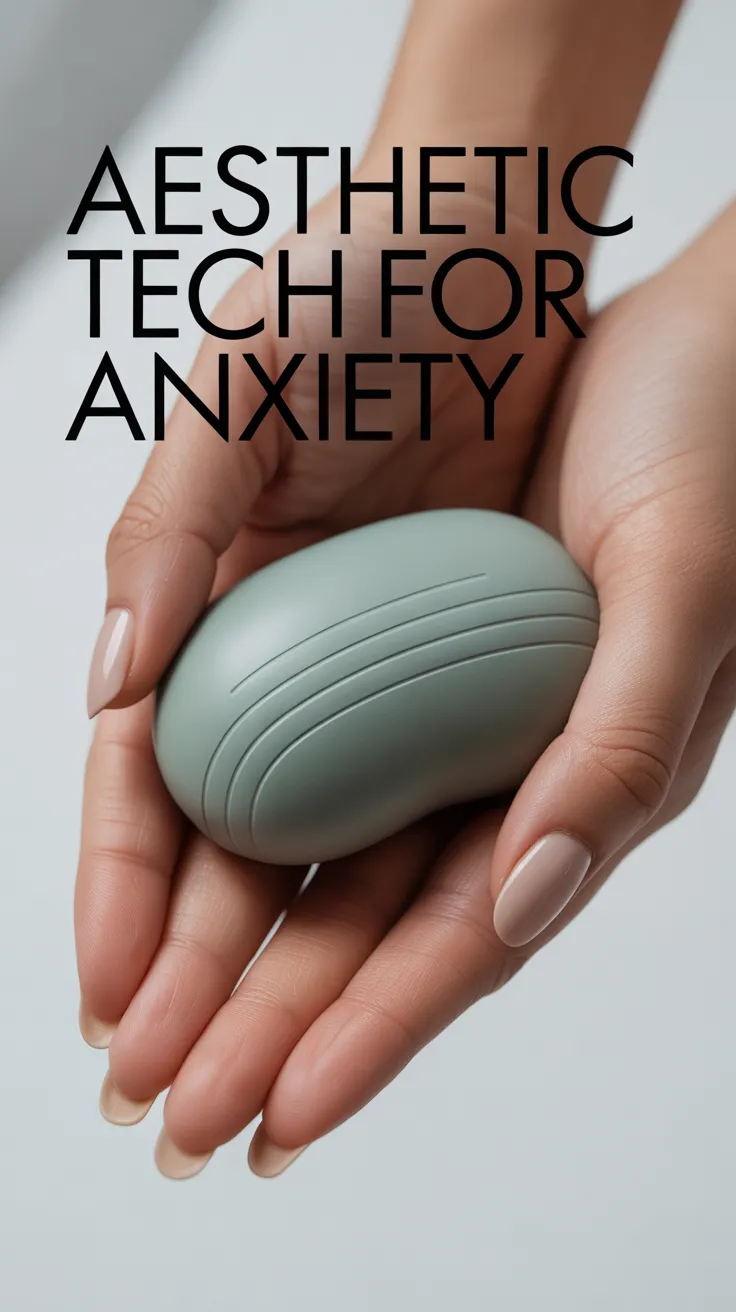
Picture this. It’s 7:43 AM. You haven’t even made coffee yet, and you’ve already processed approximately 200 micro-decisions: a push notification from a news app, three Instagram stories, a passive-aggressive email from a coworker, a TikTok algorithm that somehow knew you were feeling insecure about your career, and an AI-generated “personalized” wellness tip that felt like it was written by a robot who had never experienced a single human emotion. Because it was.
Your brain didn’t evolve for this. Full stop.
The human nervous system was designed to handle acute, short-term stressors—a predator, a physical threat, a moment of danger—followed by a long recovery period of genuine rest. What it was absolutely not designed for is a chronic, low-grade, 16-hours-a-day digital assault that never fully resolves. No predator ever ran away. The threat never ended. So your cortisol never dropped. Your sympathetic nervous system—the “fight-or-flight” branch—just kept firing. And firing. And firing.
The result? By 2026, the American Psychological Association reports that Gen Z and younger Millennials are experiencing anxiety at rates that have no historical precedent. Over 42% of women aged 18–34 report feeling “chronically overwhelmed.” Sleep disorders in this demographic have spiked 67% since 2019. And the most common descriptor women use for how they feel on a daily basis? Wired but tired.
This is not a mindset problem. This is a nervous system problem. And mindset solutions alone—journaling, gratitude lists, “positive vibes only”—cannot fix a physiological dysregulation. You need tools that speak the body’s own language.
That is the promise of neurowellness: the 2026 wellness frontier that goes beyond physical fitness, beyond skincare, beyond even traditional mental health. Neurowellness is the active, intentional practice of training your nervous system for resilience, calm, and regulation—using a combination of cutting-edge consumer neurotech, evidence-based biohacking protocols, and deeply sensory physical anchors.
The “It-Girl” of 2026 isn’t grinding herself into the ground at 5 AM bootcamps anymore. She is lying on a pastel acupressure mat, wearing a vagus nerve stimulator, in a room lit by warm amber light and scented with lavender and cedarwood. She is biohacking her peace. And she is winning.
Let’s build your toolkit.
II. Hard-Care Tech: Vagus Nerve Stimulators — The Highest-ROI Biohack for Anxiety
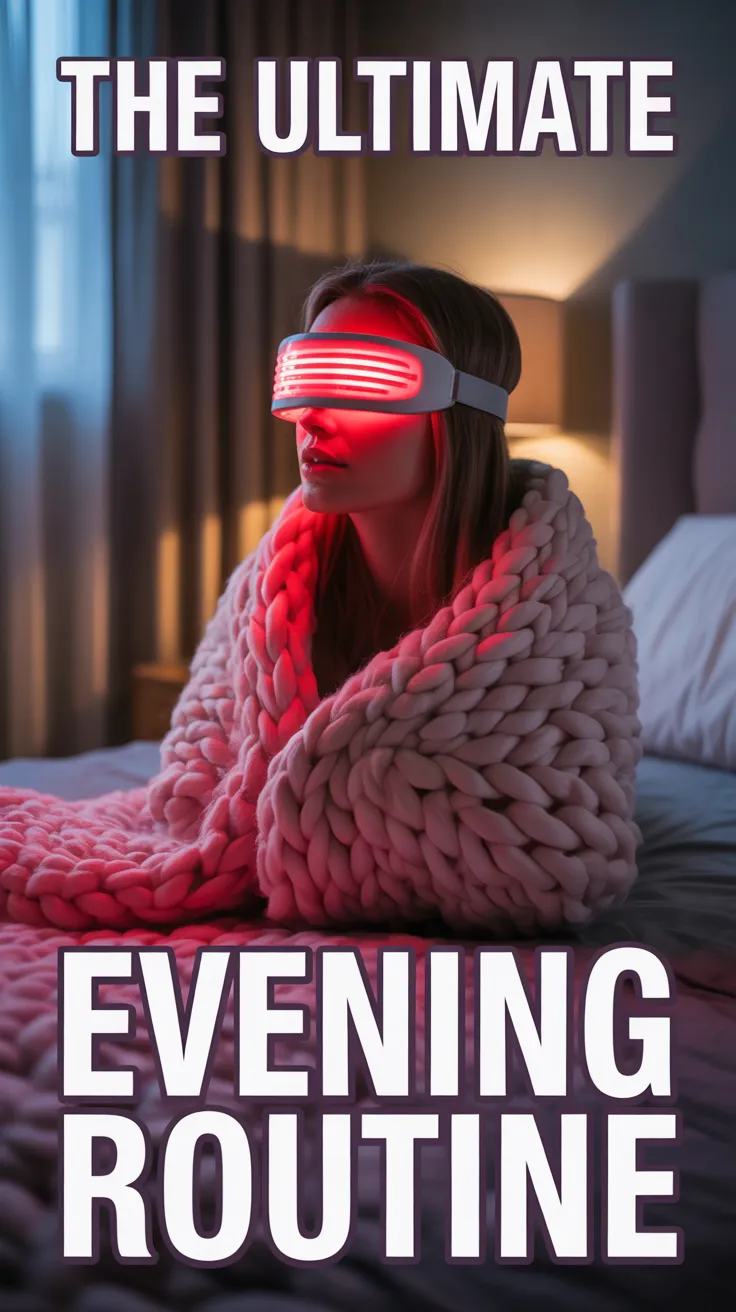
What Is the Vagus Nerve, and Why Should You Care?
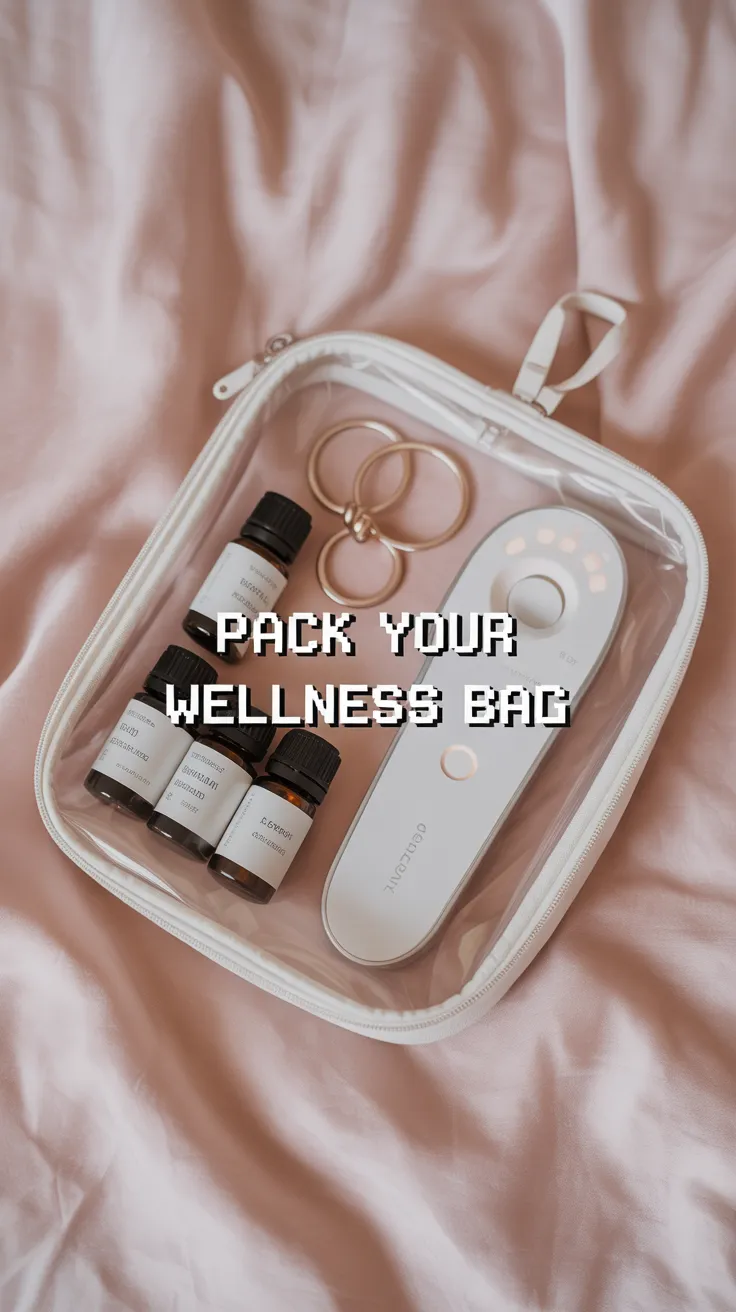
The vagus nerve is the longest cranial nerve in the human body. It runs from your brainstem all the way down through your neck, chest, and abdomen, connecting your brain to your heart, lungs, and gut. It is the literal superhighway of your parasympathetic nervous system—the “rest and digest” branch that is the direct biological opposite of your anxiety-driving “fight-or-flight” response.
When your vagus nerve is well-toned and active, your body can shift fluidly between states of alertness and deep calm. You recover from stress quickly. Your heart rate variability (HRV)—one of the most reliable biomarkers of overall nervous system health—is high. You sleep deeply. Your digestion works properly. Your mood is stable.
When your vagal tone is low—which, after years of chronic digital stress, it almost certainly is—none of those things happen easily. You get stuck in sympathetic overdrive. You can’t wind down. You lie in bed with a racing heart and a mind that won’t stop. Sound familiar?
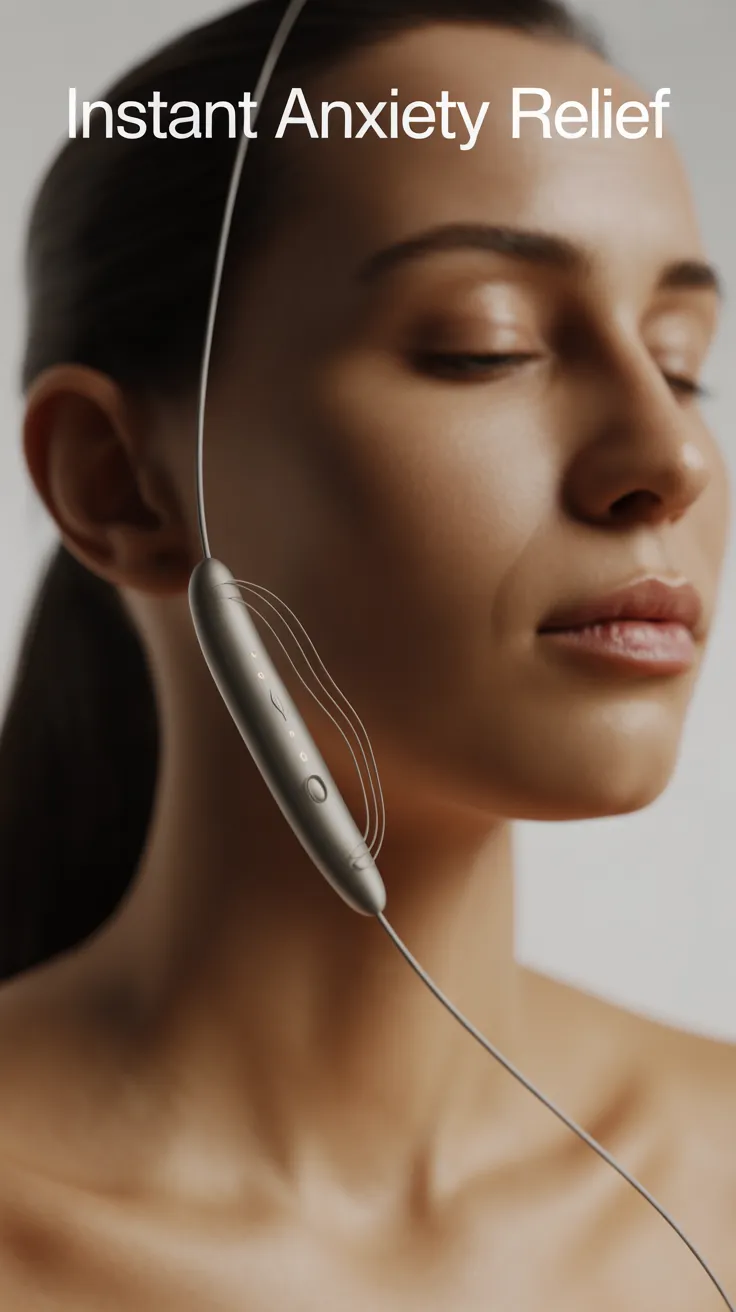
Here’s the revolutionary part: you can directly stimulate the vagus nerve from the outside of your body, using gentle, targeted electrical or acoustic vibration, to manually trigger that parasympathetic response. This is called transcutaneous vagus nerve stimulation (tVNS), and it has moved from hospital-grade clinical devices into beautiful, wearable consumer tech that you can use on your couch.
The Consumer VNS Devices Worth Your Cart
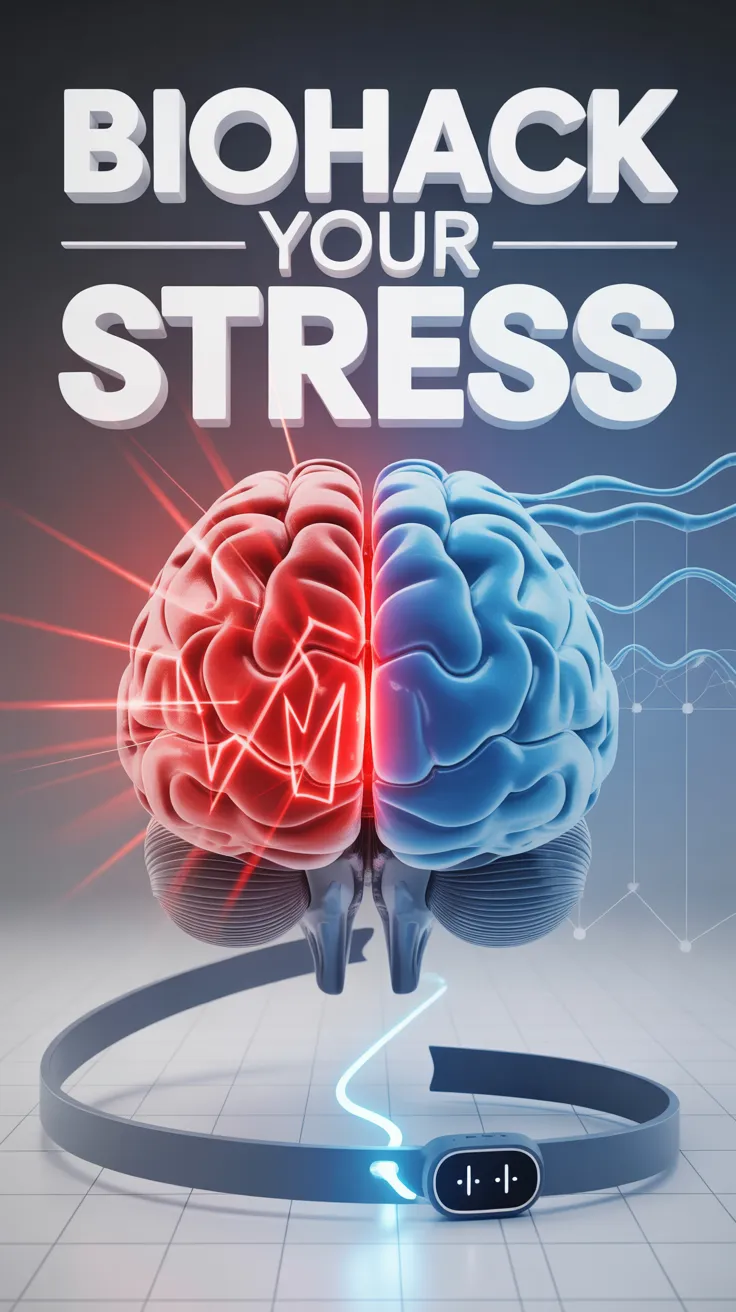
The category leader here is the wearable neck-placement VNS device—think brands like Pulsetto and Sensate, which have pioneered this space. On Amazon, you’ll find comparable devices in this category that deliver gentle, low-frequency electrical pulses to the vagus nerve via electrodes placed on the sides of the neck. Sessions typically run 4 to 20 minutes, and the effects—a measurable drop in heart rate, a softening of the “wired” feeling, a shift into genuine calm—can be felt within a single session.
The science behind these devices is not fringe. A 2023 meta-analysis published in Brain Stimulation found that transcutaneous cervical vagus nerve stimulation significantly reduced self-reported anxiety scores and improved HRV markers in participants with generalized anxiety disorder. A 2024 study from the University of Pittsburgh found that even a single 15-minute tVNS session produced measurable reductions in salivary cortisol.
Fifteen minutes. One session. Measurable cortisol reduction. That is a biohack worth investing in.
When shopping on Amazon, look for devices that specify:
- Transcutaneous (non-invasive) cervical placement — electrodes sit on the neck, not implanted
- Adjustable intensity levels — you want to start low and build up
- App connectivity — the best devices pair with an app for guided sessions and HRV tracking
- Rechargeable battery — non-negotiable for daily use
Chest-resonance devices (like the Sensate model) take a different approach: they use infrasonic vibrations delivered through the sternum to stimulate the vagus nerve via bone conduction. These are completely silent to anyone else in the room, deeply soothing, and pair beautifully with a weighted blanket session (more on that below).
✨ Shop the Kit — VNS Starter: Search Amazon for “vagus nerve stimulator wearable” + “heart rate variability monitor” to anchor your neurowellness cart. Pair with a chunky knit weighted blanket (see Section IV) for your first full nervous system reset session.
Tracking Your Calm: Heart Rate Variability Monitors
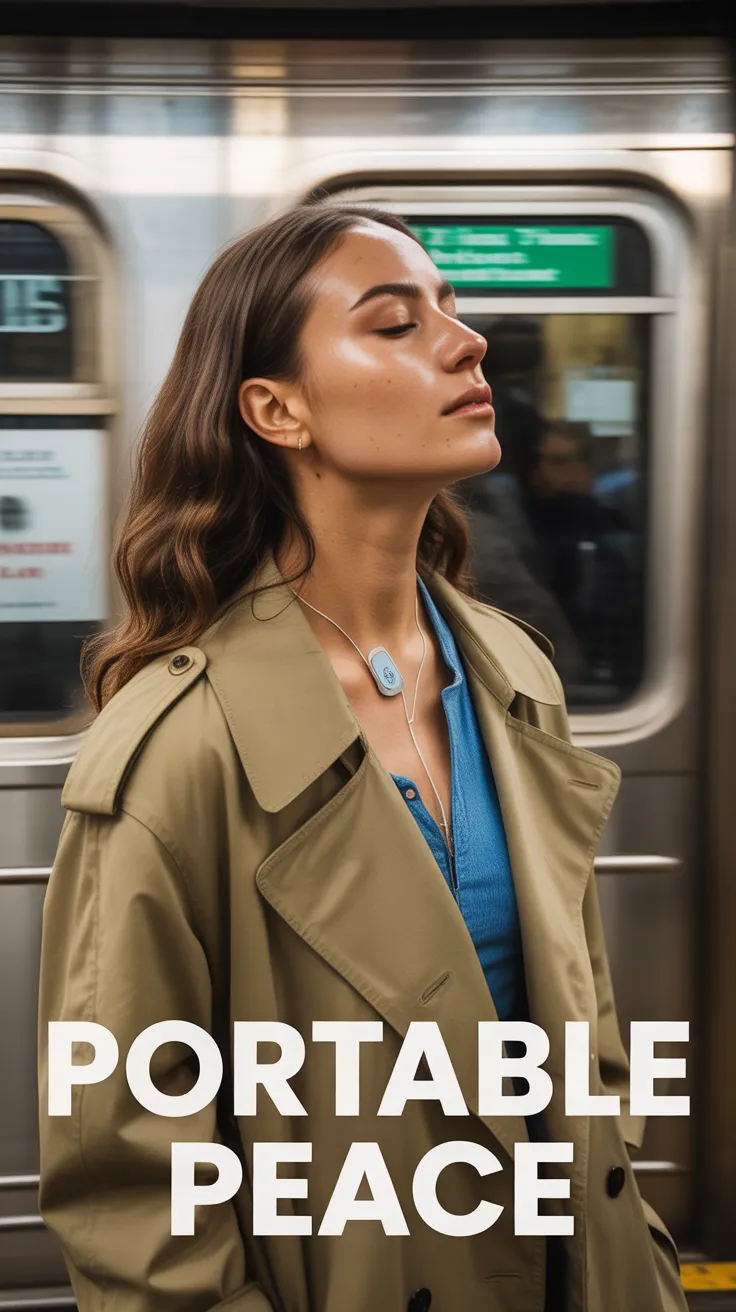
You cannot optimize what you don’t measure. If you’re investing in a VNS device, pair it with an HRV tracker so you can actually see your nervous system improving over time. HRV—the variation in time between your heartbeats—is the gold-standard biomarker for vagal tone. Higher HRV = more nervous system flexibility = more resilience to stress.
Wearable HRV monitors available on Amazon range from dedicated chest straps (most accurate) to smartwatch-style wristbands. Look for devices that offer resting HRV measurements taken first thing in the morning, as this gives you the most reliable baseline. Many pair with apps that give you a daily “readiness score” and track your HRV trends over weeks—so you can literally watch your nervous system heal.
III. Brain-Training: EEG Sleep Tech & Neurofeedback — Hacking Your Way to Deep Rest
The Racing Mind Problem
It’s midnight. You put your phone in the other room (good). You turned off the overhead light (excellent). You’re lying in bed with your weighted blanket (we’re getting there). And your brain is running a full highlight reel of every awkward thing you said in 2019, every unread email, and a detailed anxiety spiral about something that may or may not happen in six months.
This is not a willpower failure. This is your brain stuck in high-beta brainwave activity—the fast, alert, problem-solving frequency that is completely appropriate at 2 PM and completely catastrophic at midnight. The transition to sleep requires a shift down through alpha waves (relaxed alertness) into theta (drowsy, hypnagogic) and finally delta (deep, restorative sleep). For chronically stressed nervous systems, that transition is broken.
EEG-guided sleep technology addresses this directly.
Consumer EEG Headbands: The Science of Guided Sleep
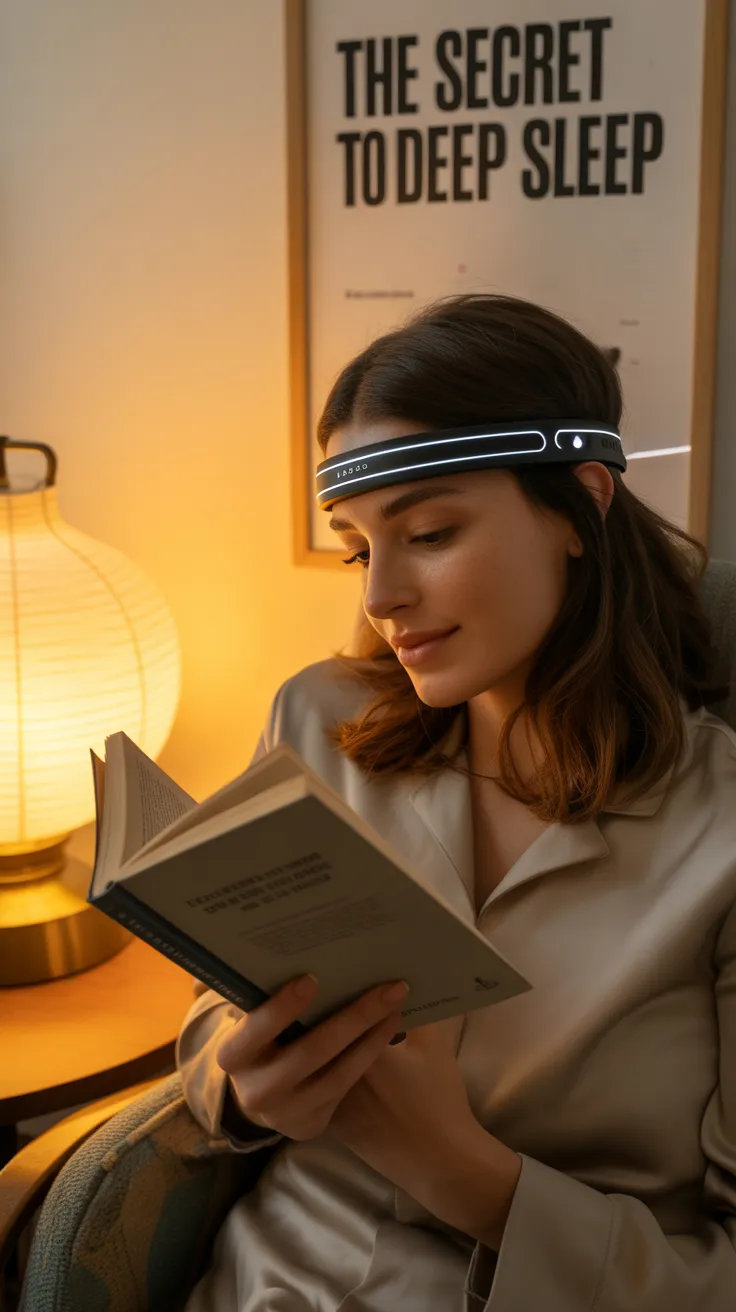
Consumer EEG (electroencephalography) headbands—pioneered by devices like the Muse headband and newer competitors in the neurofeedback space—use dry electrodes to read your brainwave activity in real time. They then deliver gentle audio or haptic feedback that guides your brain toward slower, calmer frequencies. This is called neurofeedback, and it has decades of clinical research behind it for treating anxiety, ADHD, and insomnia.
The 2026 consumer versions are genuinely sophisticated. Look for Amazon-available EEG sleep devices that offer:
- Real-time brainwave monitoring across multiple channels (frontal and temporal lobe coverage)
- Guided audio sessions — soundscapes that respond dynamically to your brain state
- Sleep stage tracking — monitoring deep sleep, REM, and light sleep percentages
- Morning HRV and sleep quality scores that integrate with your VNS data
A 2024 clinical trial published in Sleep Medicine Reviews found that participants using consumer neurofeedback headbands for 30 days reported a 41% improvement in sleep onset latency (time to fall asleep) and a 38% increase in reported sleep quality. These are not trivial numbers. These are life-changing numbers for anyone who has spent years lying awake at 1 AM with a heart rate of 90.
Comparison: EEG Sleep Tech vs. Standard Sleep Apps
| Feature | Consumer EEG Headband | Standard Smartphone Sleep App |
|---|---|---|
| Brainwave Measurement | ✅ Real-time EEG (actual neural data) | ❌ Estimated via microphone/accelerometer |
| Neurofeedback Capability | ✅ Active brain training | ❌ Passive tracking only |
| Blue Light Exposure at Bedtime | ✅ Zero (no screen required) | ❌ Requires phone on or near bed |
| HRV Integration | ✅ Many devices include or pair with HRV | ⚠️ Limited, camera-based PPG only |
| Clinical Research Backing | ✅ Decades of peer-reviewed neurofeedback research | ⚠️ Minimal independent validation |
| Cortisol Reduction Effect | ✅ Documented via brainwave entrainment | ❌ None measurable |
✨ Shop the Kit — Sleep Biohack: Search Amazon for “EEG sleep headband neurofeedback” to find your brain-training anchor. Pair with a silk sleep mask and a white noise machine for a complete sleep sanctuary setup.
IV. Soft-Care Anchors: Weighted Blankets & Acupressure Mats — The High-Touch Nervous System Reset
Why Your Nervous System Needs Physical Grounding
Here is something the biohacking world sometimes forgets: your nervous system lives in a body. And that body has skin, and that skin has millions of mechanoreceptors—pressure-sensing nerve endings that communicate directly with your vagus nerve and your parasympathetic system. Deep pressure touch is one of the oldest and most powerful nervous system regulators that exists. It’s why being hugged feels calming. It’s why swaddling soothes infants. It’s why, when you’re anxious, your instinct is to curl up under every blanket you own.
We’re just going to make that instinct intentional. And beautiful.
The Aesthetic Weighted Blanket: Your Nervous System’s Best Friend
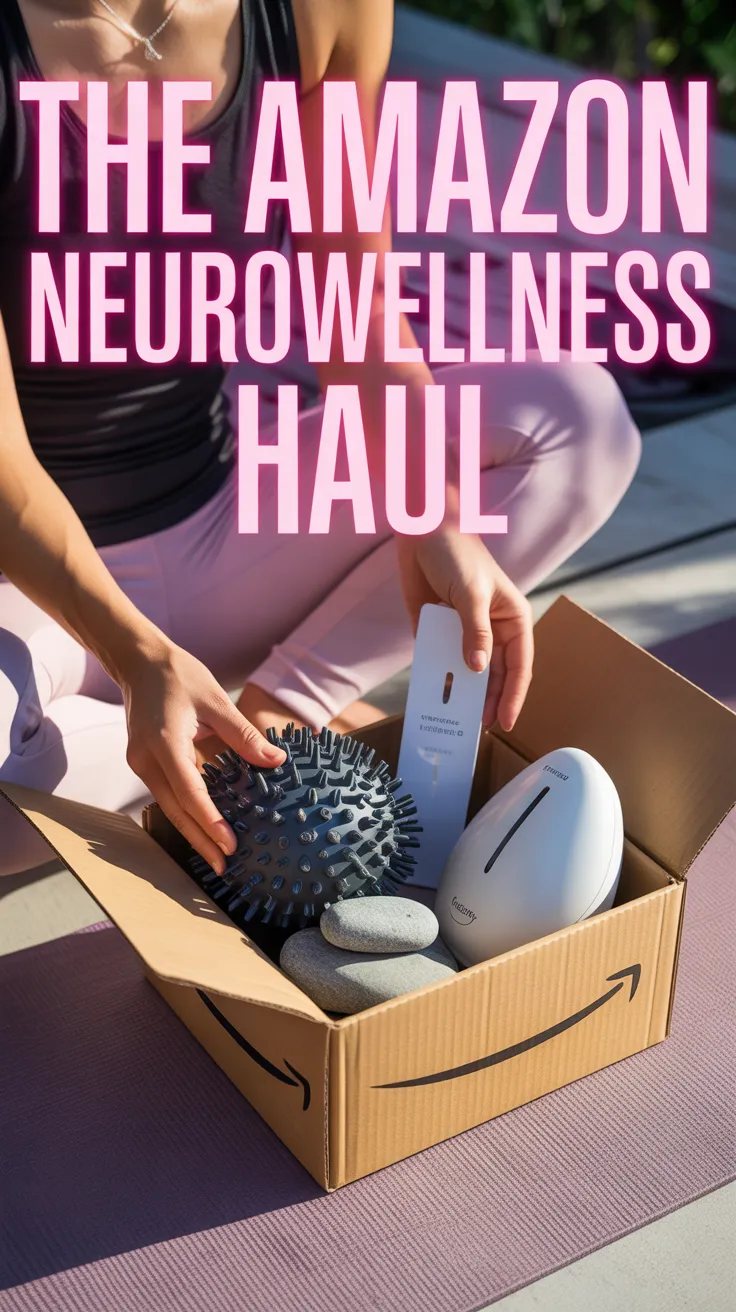
Weighted blankets use deep pressure stimulation (DPS) to activate the parasympathetic nervous system, reduce cortisol, and increase serotonin and melatonin production. A landmark study in the Journal of Sleep Medicine & Disorders found that participants using weighted blankets reported 63% lower anxiety and significantly improved sleep quality compared to controls.
The 2026 aesthetic? Chunky-knit weighted blankets in oat, sage, dusty rose, and cream. Thick, tactile, beautiful enough to be a Pinterest centerpiece and functional enough to genuinely regulate your nervous system. When shopping on Amazon, look for:
- Weight: The standard recommendation is approximately 10% of your body weight. For most women in the 18–34 demographic, this means a 12–15 lb blanket is the sweet spot.
- Fill material: Glass microbeads distribute weight more evenly and sleep cooler than plastic pellets. Non-negotiable if you run warm.
- Cover material: Chunky knit covers are the aesthetic choice. Minky and bamboo covers are the sensory choice for those with texture sensitivities. Many Amazon listings offer removable, washable covers.
- Size: A throw-size weighted blanket (48″ x 72″) is perfect for solo use on a couch or reading chair. Go full queen for bed use.
The Pastel Acupressure Mat: 20 Minutes to Instant Calm
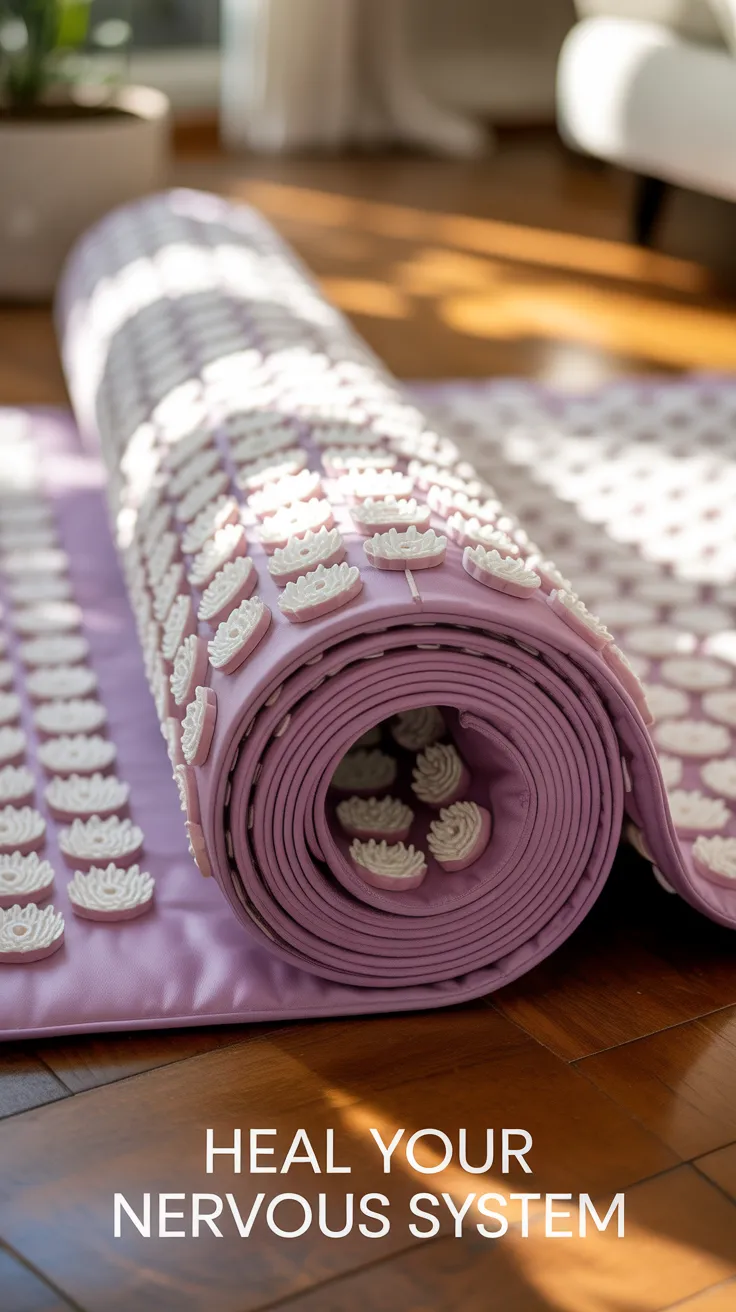
Acupressure mats—those beautiful, spike-covered foam pads that look like they belong in a Danish wellness spa—work by stimulating thousands of acupressure points across the back, neck, and feet simultaneously. The initial sensation is intense (think: a thousand tiny pressure points activating at once), followed by a profound release of endorphins and a deep, full-body relaxation response that most users describe as “the closest thing to a massage I can give myself.”
The science supports this. Acupressure stimulation has been shown to reduce cortisol levels, lower blood pressure, and increase the release of oxytocin—the bonding hormone that is directly linked to feelings of safety and calm. A 2022 study in Complementary Therapies in Clinical Practice found that 20 minutes of daily acupressure mat use reduced self-reported anxiety scores by 29% over four weeks.
For the aesthetic, look for Amazon acupressure mats in lavender, sage green, or blush pink with lotus-flower spike patterns. Many come with a matching neck pillow for cervical spine release—which, incidentally, also stimulates the vagus nerve pathway through the neck. Pair your mat session with your VNS device for a compounded parasympathetic response that is genuinely next-level.
✨ Shop the Kit — Soft-Care Anchor: Search Amazon for “chunky knit weighted blanket 15lb” + “pastel acupressure mat with pillow” to build out your tactile nervous system toolkit. This is the upsell that makes your high-tech investment land in your body.
V. Curating Your Calm Space: Diffusers & Ambient Light — Setting the Scene for Your Nervous System Reset
Why Your Environment Is a Nervous System Input
Every single sensory input your environment sends—the color of the light, the smell in the air, the temperature, the sounds—is processed by your nervous system and tagged as either “safe” or “threat.” Harsh overhead fluorescent lighting? Your brain reads it as “midday, stay alert, don’t rest.” The blue-spectrum light from your phone screen? Your brain reads it as “it’s noon, suppress melatonin, stay awake.” Your environment is either working with your nervous system or against it. Full stop.
The neurowellness “calm space” is not just an aesthetic choice. It is a physiological intervention.
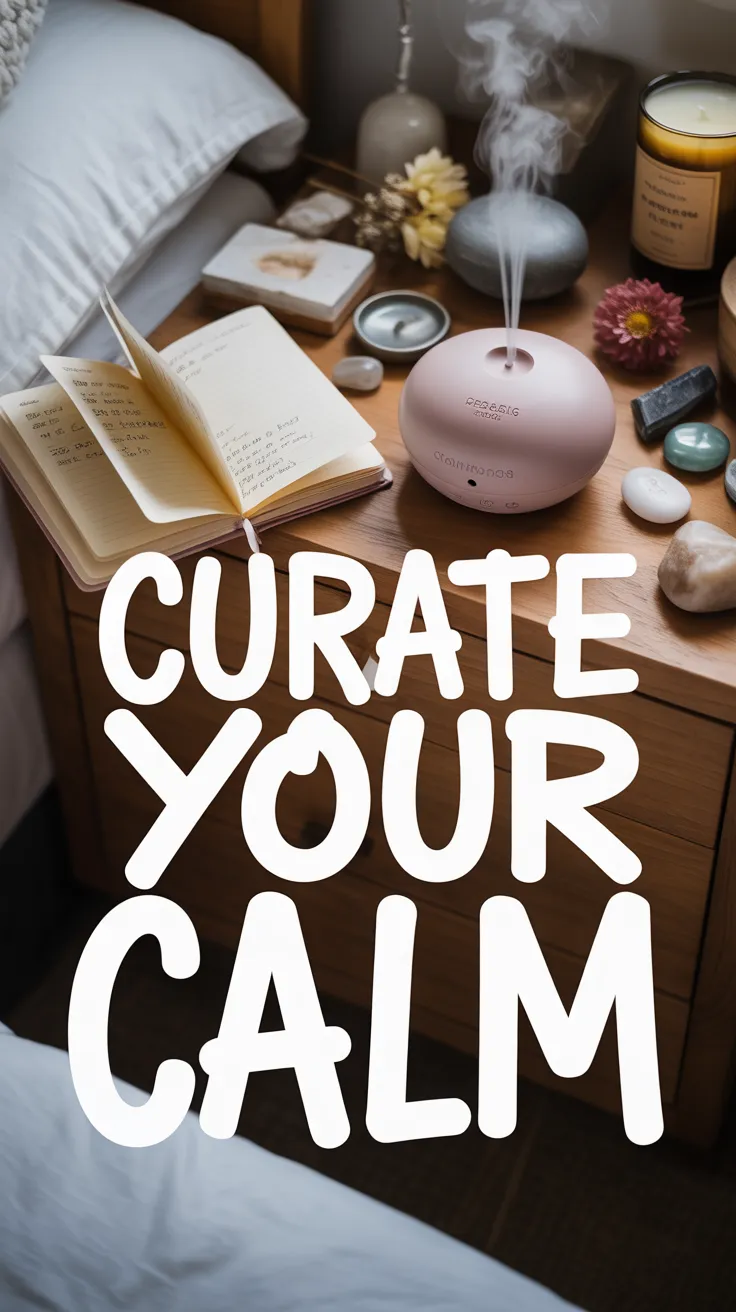
Ceramic Stone Essential Oil Diffusers: Aromatherapy as Neuroscience
Olfaction—your sense of smell—is the only sense that bypasses the thalamus and connects directly to the limbic system, the emotional and memory center of your brain. This means that scent is the fastest, most direct route to shifting your emotional and physiological state. Lavender (linalool) has been shown in multiple peer-reviewed studies to reduce salivary cortisol and self-reported anxiety. Cedarwood contains cedrol, a compound shown to have sedative effects on the central nervous system. Bergamot reduces heart rate and blood pressure in clinical settings.
This is not “woo.” This is neuroscience with a beautiful ceramic vessel.
For the 2026 aesthetic, the move is away from cheap plastic ultrasonic diffusers and toward minimalist ceramic stone diffusers—matte white, warm terracotta, or sage green. These are the ones showing up in every “Nervous System Era” Pinterest board, sitting on marble shelves next to a single linen-covered book and a glass of water. On Amazon, look for:
- Ultrasonic diffusion technology — cold-water misting preserves the therapeutic integrity of essential oil compounds (heat diffusion degrades them)
- Ceramic or stone housing — not plastic, not resin
- Auto shut-off — non-negotiable for nighttime use
- Intermittent misting mode — runs for 30 seconds, pauses for 30 seconds, extending your oil supply and preventing over-saturation
Pair your diffuser with a curated essential oil set: lavender for cortisol reduction, frankincense for grounding, eucalyptus for clarity, and ylang-ylang for heart rate reduction. Many Amazon bundles include all four.
Warm Amber Lighting: The Melanopsin Hack
Your eyes contain specialized photoreceptors called intrinsically photosensitive retinal ganglion cells (ipRGCs) that are maximally sensitive to blue-spectrum light (around 480nm wavelength). When these cells detect blue light, they send a direct signal to your suprachiasmatic nucleus—your brain’s master clock—to suppress melatonin production and increase cortisol. This is great at 10 AM. It is a nervous system disaster at 8 PM.
The solution is warm amber lighting (2700K or lower color temperature) in your evening calm space. On Amazon, look for:
- Smart bulbs with tunable color temperature — set to “warm white” or “candlelight” mode after 7 PM
- Himalayan salt lamps — the warm amber glow is naturally in the safe spectrum, and the aesthetic is unmatched
- Dimmable Edison-style LED bulbs — warm filament aesthetic, low blue light emission
- Amber-tinted blue light blocking glasses — for when you absolutely must use a screen in the evening
The goal is to make your calm space feel like golden hour, every evening. Your melanopsin receptors will thank you with a melatonin surge that makes falling asleep feel effortless.
✨ Shop the Kit — Calm Space Setup: Search Amazon for “ceramic stone essential oil diffuser ultrasonic” + “warm amber smart bulb dimmable” + “lavender essential oil set” to transform your bedroom or living room into a genuine nervous system sanctuary.
VI. The Complete Neurowellness Starter Kit: Your “Add to Cart” Checklist
Let’s bring it all together. Here is your complete, curated neurowellness toolkit—organized by category, with exactly what to search for on Amazon to build your cart today.
🧠 Hard-Care Tech (High-Ticket Anchors)
- ☐ Wearable Vagus Nerve Stimulator — Search: “vagus nerve stimulator wearable transcutaneous” | Budget: $150–$400 | Priority: #1
- ☐ HRV Monitor / Smart Ring or Wristband — Search: “HRV heart rate variability monitor wearable” | Budget: $80–$250
- ☐ EEG Sleep Headband / Neurofeedback Device — Search: “EEG sleep headband neurofeedback brainwave” | Budget: $200–$500
🌿 Soft-Care Anchors (Tactile Upsells)
- ☐ Chunky Knit Weighted Blanket (12–15 lb) — Search: “chunky knit weighted blanket glass beads” | Budget: $60–$120
- ☐ Pastel Acupressure Mat with Neck Pillow — Search: “acupressure mat set lavender lotus” | Budget: $35–$80
✨ Calm Space Essentials (Environment Optimization)
- ☐ Ceramic Stone Ultrasonic Diffuser — Search: “ceramic essential oil diffuser minimalist” | Budget: $30–$70
- ☐ Therapeutic Essential Oil Set — Search: “lavender cedarwood bergamot essential oil set” | Budget: $25–$50
- ☐ Warm Amber Smart Bulbs or Salt Lamp — Search: “warm white dimmable LED bulb 2700K” or “Himalayan salt lamp” | Budget: $20–$45
- ☐ Blue Light Blocking Glasses (Amber Lens) — Search: “amber blue light blocking glasses evening” | Budget: $20–$40
Your Daily Neurowellness Protocol
Here is how to actually use this toolkit, because owning the tools is only half the equation:
- 7:00 AM: Take your resting HRV measurement before getting out of bed. Log it in your app. This is your daily baseline.
- 8:00 AM: 15-minute VNS session with your wearable device while you drink your morning coffee or do a gentle stretch. This sets your parasympathetic tone for the day.
- 7:00 PM: Switch all overhead lights to warm amber. Start your ceramic diffuser with lavender or bergamot. Put your phone in another room.
- 8:00 PM: 20-minute acupressure mat session under your weighted blanket. Pair with your VNS device for maximum parasympathetic activation. This is your “nervous system happy hour.”
- 9:30 PM: Put on your EEG sleep headband. Let it guide you from beta to alpha to theta. Lights off. Diffuser on intermittent mode. You are done for the day.
Do this for 30 days. Check your HRV trend. Watch the number climb. Watch the anxiety soften. Watch yourself become someone who wakes up feeling rested, because you engineered that outcome with intention and with science.
VII. Next Steps: Longevity and Your Skin — The Cortisol-Collagen Connection
Here is something that the wellness industry rarely connects explicitly, even though the science is crystal clear: chronic cortisol is one of the most aggressive accelerants of skin aging that exists.
Cortisol directly degrades collagen—the structural protein that keeps your skin firm, plump, and youthful. It impairs skin barrier function, increases inflammation (hello, hormonal breakouts), and accelerates the shortening of telomeres, the protective caps on your DNA that are directly linked to cellular aging. Every night you spend in sympathetic overdrive, cortisol-flooded and unable to sleep, is a night your skin is aging faster than it needs to.
This is why healing your nervous system is not just a mental health investment. It is a longevity and skincare investment.
Once you have your nervous system regulation toolkit in place—once your cortisol is dropping, your HRV is climbing, and you are actually getting into deep, restorative sleep—your skin’s cellular repair mechanisms can finally do their job. And that is the perfect moment to layer in the next tier of biohacking: red light therapy.
Red light therapy (photobiomodulation) uses specific wavelengths of red (630–700nm) and near-infrared (800–880nm) light to stimulate mitochondrial function in skin cells, accelerate collagen synthesis, reduce inflammation, and reverse photoaging at the cellular level. It is the most evidence-backed aesthetic biohack available to consumers in 2026, and it pairs synergistically with everything you’ve built in this guide.
Your nervous system is the foundation. Your skin is the signal. Build both.
VIII. Conclusion: Biohack Your Peace — You Deserve a Regulated Nervous System
Let’s land this plane with the truth that this entire article has been building toward: you are not broken. You are not “too anxious.” You are not “bad at stress.” You are a human nervous system that has been subjected to an unprecedented, unrelenting, algorithmically-optimized assault on your attention, your dopamine system, and your capacity for genuine rest—and you have been doing it with no tools and no roadmap.
That changes today.
The 2026 neurowellness revolution is not about adding more to your plate. It is about building a system—a daily, intentional, sensory-rich protocol that tells your nervous system, at every level, that you are safe. The wearable VNS device that manually triggers your parasympathetic response. The EEG headband that trains your brain out of racing-thought loops. The weighted blanket that wraps you in deep pressure calm. The ceramic diffuser filling the air with cortisol-lowering lavender. The amber light that tells your melanopsin receptors it’s time to rest.
This is not self-care. This is nervous system engineering. And you are absolutely capable of doing it.
Start with one piece. The weighted blanket if budget is the consideration. The VNS device if you’re ready to anchor your cart with the highest-ROI biohack available. The acupressure mat if you want to feel the difference in your body within the first twenty minutes.
Then build. Layer by layer. Tool by tool. Until your nervous system is not something that happens to you, but something you actively, intentionally, beautifully govern.
Unplugged. Unbothered. Regulated.
That is the JOMO era. That is neurowellness. And that is exactly who you are becoming.
✨ Final CTA — Shop the Full Neurowellness Kit: Head to Amazon and search for our curated list of vagus nerve stimulators, aesthetic weighted blankets, EEG sleep headbands, ceramic diffusers, and acupressure mats to start healing your nervous system today. Your parasympathetic system is waiting. Your future self—rested, regulated, and genuinely calm—is waiting. Add to cart. Begin.
Keywords Woven Throughout This Article
neurowellness gadgets, vagus nerve stimulator, tech for anxiety, biohacking for women, aesthetic weighted blanket, acupressure mat, nervous system regulation, 2026 wellness trends, sleep tech, heart rate variability, EEG neurofeedback, digital fatigue, JOMO lifestyle, cortisol reduction, parasympathetic nervous system, deep pressure stimulation, essential oil diffuser, blue light blocking, intentional living, neurowellness 2026
“`