
The Best Fluffy Pancakes recipe you will fall in love with. Full of tips and tricks to help you make the best pancakes.

I. The Y2K Cyberdeck Aesthetic: Why Your Desk Needs a Glow-Up
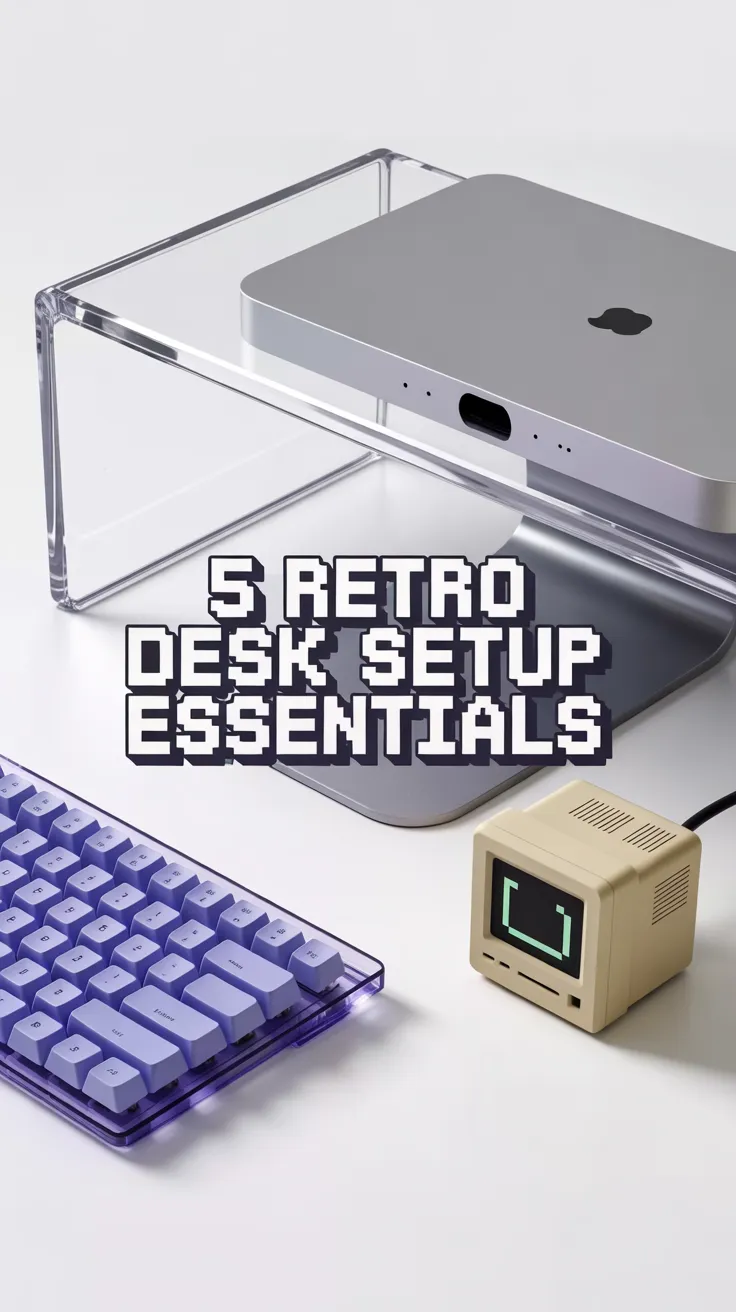
Close your eyes for a second. Picture the computer lab from your elementary school circa 2003. The chunky iMac G3s in translucent Bondi Blue and Grape Purple. The way the afternoon light hit the clear plastic shell and made the whole machine look like it was glowing from the inside out. The satisfying, almost musical click of a keyboard that had actual weight to it. The mouse that felt like a small, friendly spaceship in your hand.
Now open your eyes and look at your current desk setup. A matte black laptop. A flat, featureless wireless mouse the color of a storm cloud. Maybe a monitor that looks like it belongs in a corporate conference room. Functional? Sure. But does it spark joy? Does it make you want to sit down and create something? Does it look even remotely cute on your Instagram grid or your Pinterest board?
Didn’t think so.
Here is the thing that is quietly revolutionizing the “desk setup” space on every corner of the internet right now: the Y2K Cyberdeck DIY. What started as a niche subreddit hobby for hardware hackers building custom portable computers has been completely, beautifully hijacked by the aesthetic community — and the results are absolutely stunning. We are talking transparent acrylic risers that make your monitor look like it is floating on air. Mechanical keyboards in clear purple resin that glow like a bioluminescent jellyfish. A charger shaped exactly like a tiny vintage Macintosh computer sitting on your desk like the world’s most functional piece of retro sculpture. And a wireless mouse with an actual, real, floating clownfish suspended inside liquid — because why not?
This is not your older brother’s “battlestation.” This is the Y2K aesthetic desk setup — and it is the single biggest room decor flex happening in 2024 and beyond.
The data backs this up completely. Searches for “clear mechanical keyboard” are up over 340% year-over-year on Pinterest. “Transparent tech aesthetic” boards are being saved at a rate that rivals traditional home decor categories. The 18–34 female demographic — the same people who drove the resurgence of film cameras, flip phones, and low-rise jeans — have fully claimed the cyberdeck trend and made it their own. They have stripped out the grimy, utilitarian “hacker” energy and replaced it with something that feels like a Y2K summer afternoon: pastel-lit, glowing, and completely irresistible.
In this guide, we are breaking down the five essential components of the perfect Y2K cyberdeck DIY setup, from the foundation up. Every single pick has been chosen for maximum aesthetic impact, genuine functionality, and that specific, hard-to-describe feeling of nostalgia — the sense that your desk exists in a beautiful parallel timeline where the early 2000s never ended and everything stayed shiny, translucent, and full of possibility.
Let’s build something beautiful.
II. The Floating Foundation: Clear Acrylic Monitor Risers

Why Your Desk Organization Is Killing Your Aesthetic
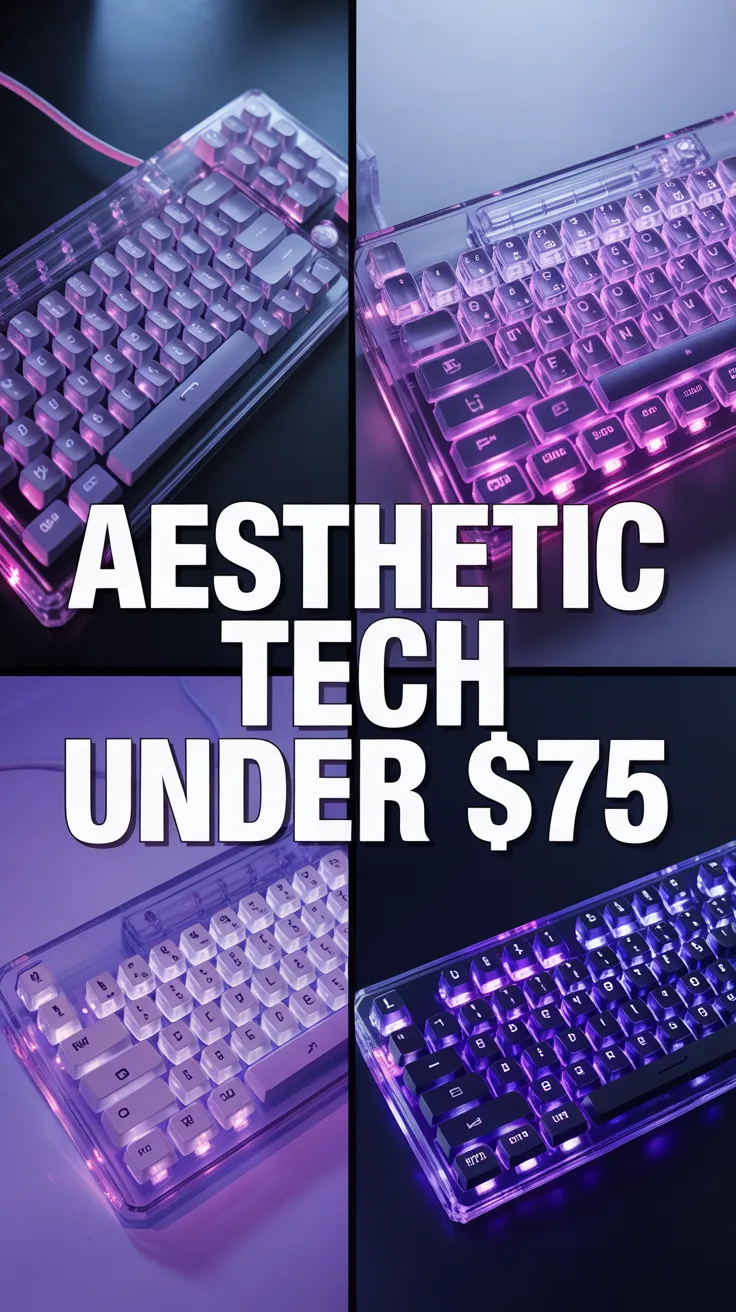
Every great setup starts from the ground up — or in this case, from the desk surface up. And the single most underrated element of any Y2K-inspired workspace is the clear acrylic monitor riser. It sounds almost too simple. A stand. A platform. But the visual impact of elevating your monitor, laptop, or even your keyboard collection on a perfectly transparent acrylic base is genuinely transformative.
Think about what a cluttered, flat desk actually communicates visually. Everything is at the same level. Your coffee mug fights for visual space with your laptop, which fights with your notebook, which fights with your charging cables. The eye has nowhere to rest. There is no hierarchy, no sense of intentional design. It looks like a desk that happened to you, rather than a desk you curated.
Now think about what happens when you introduce vertical dimension with transparent materials. Suddenly your monitor is elevated, creating a clean negative space beneath it where you can store your keyboard when not in use, or display a small potted succulent, or let your LED strip lighting shine through. The transparency means the riser itself almost disappears visually, creating that signature “floating” effect that is absolutely everywhere on aesthetic desk setup Pinterest boards right now.
What to Look for in a Y2K-Worthy Acrylic Riser
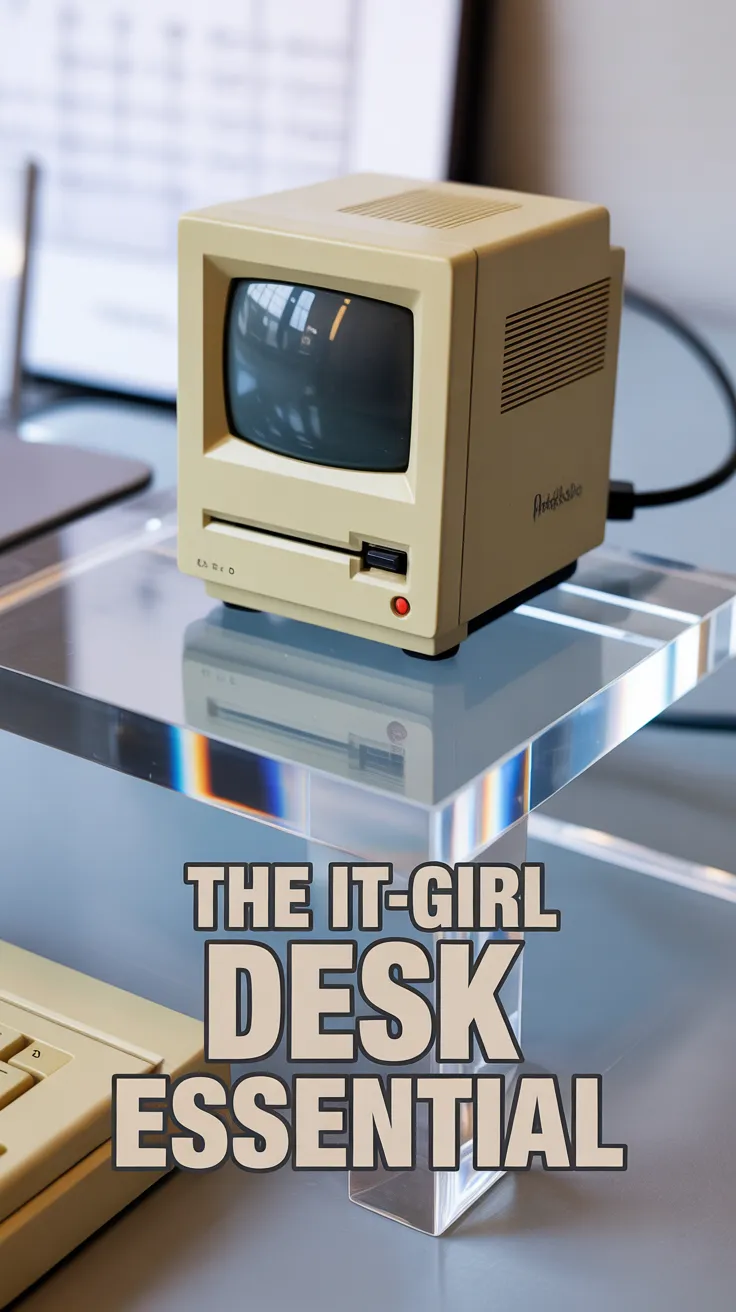
Not all acrylic risers are created equal, and the difference between a cheap, scratched-up plastic shelf and a genuinely beautiful clear acrylic stand is immediately visible. When you are shopping for the foundation of your Y2K cyberdeck, prioritize these features:
Crystal-clear optical-grade acrylic — not the slightly milky, off-white plastic that cheap versions use. You want the kind of clarity that makes the riser look like a solid block of glass.
Laser-cut or polished edges — the edges of the acrylic should be smooth and slightly rounded, not sharp or frosted from a rough cut. Polished edges catch light beautifully and add a premium feel.
Sufficient weight capacity — look for risers rated for at least 20–30 lbs if you are placing a monitor on them.
Modular or tiered designs — two-tier or L-shaped acrylic risers let you create that layered, organized look that photographs so well. One tier for your monitor, a lower tier for your keyboard or accessories.
The visual language here is pure Frutiger Aero meets early Apple Store: clean, transparent, light-filled, and unmistakably 2000s in spirit. Pair your clear riser with a pastel LED strip tucked underneath the monitor shelf, and you have created a glowing, ethereal base for your entire setup that costs less than a dinner out.
Acrylic risers are also the ultimate “invisible” organizer. Because they are transparent, they add structure and height to your desk without adding visual weight. Your setup looks clean, intentional, and spacious — even if your desk is genuinely tiny.
🛒 Shop the Aesthetic: Search Amazon for “clear acrylic monitor riser desk organizer” to find the floating foundation your Y2K cyberdeck deserves. Pair with LED strips in lavender or soft pink for maximum nostalgic glow.
III. The Centerpiece: Transparent Mechanical Keyboards That Go Viral

The Keyboard Is the Heart of the Cyberdeck

If the acrylic riser is the foundation of your Y2K setup, the mechanical keyboard is its beating heart — and nothing, absolutely nothing, signals “intentional aesthetic” quite like a transparent mechanical keyboard in a pastel or jewel-toned colorway. This is the single item that will get the most comments when you post your setup. This is the piece that makes people stop scrolling on Pinterest. This is the impulse purchase that launches a thousand desk makeovers.
The mechanical keyboard revival has been building for years in the gaming and productivity communities, but the Y2K aesthetic wave has done something remarkable: it has completely decoupled the mechanical keyboard from its “gamer” associations and reframed it as a piece of art. A decorative object that also happens to be a genuinely superior typing experience. And the transparent keyboard specifically — with its visible switches, its glowing RGB lighting visible through the clear case, its almost sculptural quality — is the definitive Y2K cyberdeck centerpiece.
The AULA F68: The Clear Purple Keyboard the Internet Cannot Stop Talking About
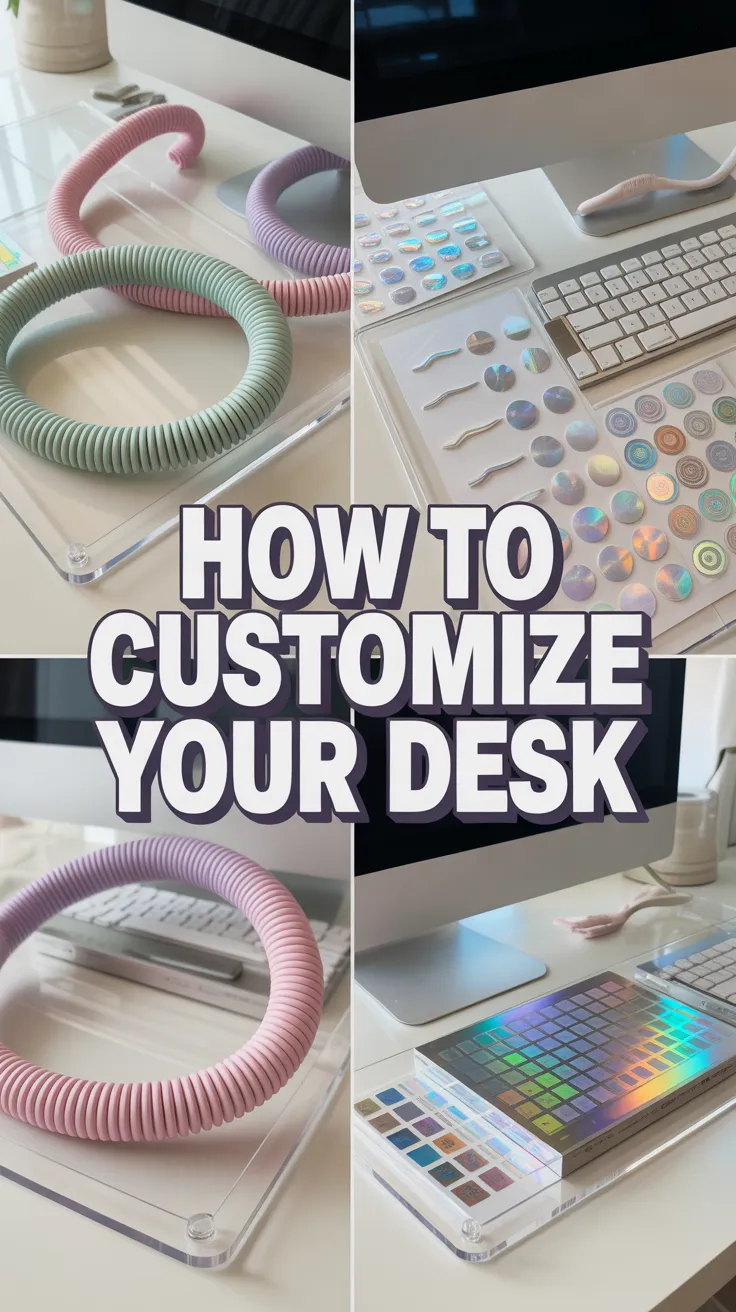
Let’s talk about the AULA F68 Clear Purple Mechanical Keyboard, because this specific product has become something close to iconic in the aesthetic desk community. The F68 is a 65% layout keyboard — compact enough to leave room on your desk for other beautiful things, but with enough keys to be genuinely functional for everyday use, creative work, and even light gaming.
The case is the star. It is a deep, translucent purple — not opaque, not milky, but genuinely see-through in a way that lets you see the PCB, the switches, and the RGB lighting all at once. When the backlighting is on, the whole keyboard glows like a piece of amethyst that someone plugged into the wall. It is the exact visual language of a 2003 iMac, a transparent Game Boy Color, a clear purple binder from the Lisa Frank era — that specific, joyful, “why is this see-through and why does it make me so happy” energy.
Functionally, the F68 delivers genuinely solid performance. The hot-swap PCB means you can swap out the switches without soldering — a huge deal if you want to customize your typing feel over time. The gasket-mount design gives it a softer, bouncier keystroke feel than traditional tray-mount keyboards. And the per-key RGB lighting, visible through that gorgeous clear purple case, creates a light show that is genuinely mesmerizing in a dim room.
AULA F68 Key Specs at a Glance
Layout: 65% (68 keys)
Case Material: Transparent polycarbonate (clear purple)
Switch Type: Hot-swappable (compatible with most 3-pin and 5-pin switches)
Lighting: Per-key RGB, fully visible through transparent case
Mount Style: Gasket mount for soft, premium typing feel
Connectivity: Wired USB-C
Aesthetic Vibe: 10/10 — this is the one
The XINMENG X75: For the Aesthetic Purist Who Wants More Keys
If the 65% layout feels too compact for your workflow, the XINMENG X75 offers a beautiful alternative. The X75 is a 75% layout keyboard — adding a function row and a few navigation keys while keeping the overall footprint impressively small — in a similarly translucent case that photographs beautifully from every angle.
What sets the XINMENG X75 apart is its attention to the details that matter to the aesthetic community. The keycaps have a slightly frosted finish that diffuses the RGB backlighting into a soft, dreamy glow rather than harsh individual points of light. The case has subtle curves that feel more “early Apple” than “aggressive gaming peripheral.” And the sound profile — that satisfying, medium-pitched thock of a well-tuned gasket-mount keyboard — is the kind of thing you will find yourself typing just for the pleasure of hearing it.
Both keyboards sit in the $60–$120 range, which positions them as genuine impulse buys for anyone who has already mentally committed to the Y2K desk aesthetic. And once you have a glowing, transparent keyboard on your desk, every other piece of boring black plastic around it becomes instantly intolerable. Consider this your gateway product.
Transparent Keyboard Comparison: Y2K Heroes vs. Soulless Alternatives
Feature | AULA F68 (Clear Purple) | XINMENG X75 (Transparent) | Generic Black Membrane Keyboard | Apple Magic Keyboard |
|---|---|---|---|---|
Aesthetic Score | ⭐⭐⭐⭐⭐ Y2K Perfection | ⭐⭐⭐⭐⭐ Dreamy Frosted | ⭐ Corporate Nightmare | ⭐⭐⭐ Minimal but Boring |
Typing Feel | Soft gasket thock | Smooth gasket bounce | Mushy membrane | Flat scissor switch |
RGB Visibility | Full glow through clear case | Diffused dreamy glow | None / hidden | None |
Hot-Swappable | Yes | Yes | No | No |
Y2K Cyberdeck Vibe | ✅ Absolutely | ✅ Absolutely | ❌ Hard No | ❌ Wrong Decade |
Price Range | $65–$85 | $70–$100 | $15–$30 | $99–$129 |
🛒 Shop the Aesthetic: The AULA F68 Clear Purple Mechanical Keyboard and the XINMENG X75 are both available on Amazon. Search by name and filter for the transparent/clear colorways. Your desk will never look the same.
IV. Nostalgic Power: The Retro Macintosh Charger That Is Secretly a Desk Decoration
The Accessory Nobody Knew They Needed Until They Saw It
Here is a truth about the Y2K aesthetic desk setup that nobody talks about enough: the accessories are where the magic lives. You can have a beautiful keyboard and a floating acrylic riser, but if your charging setup is a tangled mess of generic white bricks and fraying cables, the whole vibe collapses. The details matter enormously in an aesthetic setup, and nowhere is this more apparent than in your charging station.
Which is exactly why the SHARGE 67W GaN Retro Macintosh Charger exists, and exactly why it has become one of the most talked-about desk accessories in the aesthetic tech community. Because it is not just a charger. It is a tiny, functional sculpture. A miniature monument to the golden age of Apple design. A piece of tech nostalgia that sits on your desk and makes every single person who sees it say, out loud, “Wait — what IS that?”
A Charger That Looks Like a 1984 Macintosh (And Actually Works Brilliantly)
The SHARGE retro charger is designed to look exactly like the original 1984 Macintosh computer — the boxy, upright form factor with the subtle screen indent on the front, the warm off-white color palette that defined early Apple’s entire aesthetic language. But instead of a screen, the SHARGE has a small LED display that shows real-time wattage output. Instead of a floppy drive slot, there are USB-C and USB-A ports. And instead of weighing 16 pounds like the original Mac, it fits in the palm of your hand.
The technical specs are legitimately impressive. 67W GaN (Gallium Nitride) technology means it can fast-charge a MacBook Pro, an iPhone, and an iPad simultaneously without breaking a sweat — and without generating the heat that older charger technology produces. GaN chargers run cooler, charge faster, and last longer than traditional silicon-based chargers. This is not a novelty item with bad internals dressed up in a cute case. This is a premium charger that happens to be the most aesthetically perfect desk accessory in the Y2K transparent tech space.
SHARGE 67W Retro Charger: Full Breakdown
Design Inspiration: Original 1984 Apple Macintosh
Total Output: 67W GaN technology
Ports: 2x USB-C + 1x USB-A
Display: Real-time wattage LED readout (the “screen”)
Compatibility: MacBook, iPhone, iPad, Android, Nintendo Switch
Dimensions: Compact enough to sit on your desk as decor
Aesthetic Category: Retro-futurist / Y2K Desk Essential
The Psychology of “Functional Decor” in the Y2K Aesthetic
There is a specific kind of object that the aesthetic community has always gravitated toward: things that are both beautiful and useful. Not decorative objects that just sit there looking pretty, and not purely utilitarian tools that are efficient but ugly. The sweet spot — the thing that gets pinned ten thousand times on Pinterest — is the object that does its job perfectly while also being genuinely delightful to look at.
The SHARGE Macintosh charger is the platonic ideal of this category. Every time you plug in your laptop, you are interacting with a tiny piece of design history. Every time a friend comes to your room and sees it on your desk, there is a moment of recognition and delight — “Oh my god, is that a little Mac?” — that a generic white charging brick could never, ever produce. It transforms a mundane, invisible task (charging your devices) into a small moment of aesthetic pleasure.
This is what the Y2K cyberdeck DIY philosophy is really about, at its core. Not just making your desk look good in photos (though it absolutely will), but surrounding yourself with objects that make everyday interactions more joyful, more intentional, more you.
🛒 Shop the Aesthetic: Search “SHARGE retro Macintosh GaN charger” on Amazon to find this tiny masterpiece. It sells out regularly — add it to your cart now before it disappears again.
V. The Throwback Accessory: The Liquid Aqua Mouse With a Floating Clownfish Inside
Frutiger Aero Meets Y2K: The Aesthetic Mouse That Broke the Internet
If you have spent any time on aesthetic desk setup TikTok or Pinterest in the last 18 months, you have almost certainly seen it. The mouse. The mouse. The one that looks like it was designed by a marine biologist who also happened to be a product designer at a late-90s tech startup. The wireless mouse with a transparent body filled with actual liquid, and inside that liquid, a tiny, perfect, orange-and-white clownfish that floats and drifts with every movement of the mouse.
Yes. This is a real product. Yes, it is available on Amazon. And yes, it is exactly as wonderful as it sounds.
The liquid aqua mouse with floating clownfish is the single most “Y2K” desk accessory that exists in the current market, and that is not an exaggeration. It perfectly captures two overlapping aesthetic movements that are dominating the internet right now: the Y2K transparent plastic trend (clear, glowing, see-through everything) and the Frutiger Aero aesthetic — that specific visual language of the mid-2000s that was obsessed with water, glass, organic shapes, and the feeling of technology being somehow natural and alive.
Remember Windows Vista’s default wallpapers? The Aurora Borealis screensavers? The way early 2000s tech advertising always seemed to involve water droplets and lens flares and glowing orbs? That is Frutiger Aero, and it is having an enormous cultural revival right now among exactly the demographic that is building Y2K cyberdeck setups.
More Than Just a Vibe: The Aqua Mouse Actually Performs
Here is the thing that surprises people about the liquid aqua mouse: it is not just a novelty. The wireless connectivity is reliable, the sensor is accurate enough for everyday use and light creative work, and the ergonomic shape — slightly rounded and satisfyingly weighted by the liquid inside — actually feels quite good in the hand for extended sessions.
The liquid is sealed completely — there is no leaking, no sloshing sound, no mess. The clownfish (and sometimes other small figures, depending on the variant you choose) drifts gently as you move the mouse, creating a tiny, mesmerizing animation on your desk that is somehow both calming and delightful. It is a fidget toy, a desk decoration, and a functional peripheral all in one object.
The transparent body also means that, like the clear mechanical keyboard, the mouse participates in the overall “transparent tech” visual theme of your Y2K cyberdeck. When your LED lighting hits it from the right angle, the liquid inside catches the light and scatters it in ways that are genuinely beautiful. It photographs spectacularly. It will be the first thing anyone asks about when they see your desk setup.
Building the Complete Frutiger Aero / Y2K Desk Ecosystem
When you place the liquid aqua mouse next to your clear purple mechanical keyboard, on top of your transparent acrylic riser, next to your tiny Macintosh charger — something clicks into place. The setup starts to feel like a world, not just a collection of objects. There is a coherent visual language running through every piece: transparency, nostalgia, light, and that specific early-2000s optimism about technology — the feeling that computers and gadgets were exciting, personal, and joyful rather than anxiety-inducing and addictive.
That feeling is what the Y2K aesthetic revival is really chasing. Not just the visual style, but the emotional register of a time when tech felt playful and full of possibility. The liquid aqua mouse, more than almost any other single product, captures that feeling perfectly.
🛒 Shop the Aesthetic: Search “liquid fish mouse wireless transparent” on Amazon to find the aqua mouse. Multiple variants are available — look for the ones with the highest review counts and the clearest, most transparent body for maximum visual impact.
VI. Style Pitfalls & Setup Tips: Making Your Y2K Cyberdeck Actually Work
The Mistakes That Kill the Aesthetic (And How to Avoid Them)
Building a Y2K cyberdeck setup is genuinely exciting, but there are a few common mistakes that can undermine all your carefully chosen pieces. Consider this your pre-purchase checklist from your aesthetic bestie who has seen every setup mistake in the book.
Pitfall #1: Mixing Too Many Color Temperatures in Your LED Lighting
The transparent and translucent pieces in your Y2K setup — the keyboard, the mouse, the acrylic riser — are all going to interact with your ambient lighting. If you mix warm yellow LED strips with cool blue monitor backlighting with pink fairy lights, the result looks chaotic rather than curated. Pick one dominant color temperature for your LED lighting and let everything else support it. Soft lavender, cool aqua blue, and warm rose pink are the three most “Y2K” LED colors right now. Choose one as your hero and use the others as accents only.
Pitfall #2: Forgetting Cable Management
This is the one that kills more aesthetic setups than anything else. You have a floating acrylic riser, a glowing transparent keyboard, a beautiful retro charger — and then a nest of tangled cables running across the whole desk like a visual disaster. Invest in cable management clips, cable sleeves in a matching color, and a small cable management tray that mounts under the desk. Clear or white cable management accessories are available on Amazon for under $15 and are completely invisible when done right.
Pitfall #3: Buying One Statement Piece and Surrounding It with Generic Black Plastic
The Y2K cyberdeck aesthetic works because of cohesion. One clear purple keyboard surrounded by a matte black monitor, a generic black speaker, and a corporate-gray mouse pad is not a Y2K setup — it is one good purchase surrounded by visual noise. Commit to the aesthetic. Swap out your mouse pad for a clear acrylic or pastel fabric option. Replace your black pen holder with a transparent acrylic organizer. Small, inexpensive swaps throughout the setup create the immersive, “I stepped into a 2003 Apple Store” atmosphere that makes these setups go viral.
Pitfall #4: Ignoring the Background
Your desk setup exists in a room, and the wall behind your setup is part of the composition — especially when you are photographing it for social media. A plain white wall is fine and lets your colorful tech pieces pop. A wall with some intentional Y2K-adjacent decor — a transparent pegboard with clear acrylic accessories, a vintage tech poster, some iridescent wall panels — elevates the whole setup from “nice desk” to “full aesthetic experience.”
The “What the Community Is Saying” Reality Check
Before you spend a single dollar, it is worth understanding what the actual community of aesthetic desk builders has learned through trial and error. The consensus on Reddit’s r/MechanicalKeyboards, r/Battlestations, and the growing r/AestheticDesks community is remarkably consistent:
Start with the keyboard. It is the highest-impact, most visible piece of any desk setup. If you can only buy one thing from this list, make it the AULA F68 or the XINMENG X75. The keyboard will immediately transform how your desk looks and feels, and it will give you a clear visual direction for everything else you add.
The liquid mouse is the conversation starter. Multiple reviewers note that the aqua fish mouse gets more comments from visitors than any other piece of their setup. It is the “wait, what is THAT?” moment that every good aesthetic setup needs.
The Macintosh charger is the detail that separates good setups from great ones. Anyone can have a glowing keyboard. Not everyone has a tiny functional Macintosh on their desk. It is the detail that signals genuine curation and aesthetic intentionality.
The acrylic riser is the most underrated purchase. Almost universally, people who add a clear acrylic riser to their setup report that it was the single change that made everything else look more intentional and organized. It is cheap, it is invisible, and it is transformative.
Final Verdict: Boot Up Your Y2K Cyberdeck and Never Look Back
This Is More Than a Desk Setup. It Is a Statement.
Here is what nobody tells you about building a Y2K cyberdeck DIY setup: the moment you finish it — the moment you sit down at a desk that is glowing and transparent and full of nostalgic beauty — something shifts. The act of creating, working, and existing at that desk feels different. More intentional. More joyful. More you.
That is not marketing language. That is the genuine, documented psychological effect of surrounding yourself with objects that are beautiful and meaningful. The Y2K aesthetic revival is not just about visual trends — it is about reclaiming a relationship with technology that feels personal, playful, and human. In a world of identical matte-black laptops and algorithmically optimized, personality-free peripherals, a glowing purple transparent keyboard with a liquid fish mouse and a tiny Macintosh charger is a small act of rebellion. It says: I choose joy. I choose beauty. I choose to make my everyday environment reflect who I actually am.
The five pieces in this guide — the clear acrylic riser, the AULA F68 transparent keyboard, the XINMENG X75, the SHARGE Macintosh charger, and the liquid aqua fish mouse — are not just products. They are the building blocks of an aesthetic world you get to live in every single day.
And the best part? The full Y2K cyberdeck setup can be built for under $300 if you are strategic about it. That is less than a single premium office chair, and it will do infinitely more for the way your space looks, feels, and inspires you.
Your Complete Y2K Cyberdeck Shopping List
Essential | Product | Aesthetic Role | Approx. Price | Priority |
|---|---|---|---|---|
1. Foundation | Clear Acrylic Monitor Riser | Floating, organized base layer | $20–$45 | ⭐⭐⭐⭐ High |
2. Centerpiece | AULA F68 Clear Purple Keyboard | The glowing hero of the setup | $65–$85 | ⭐⭐⭐⭐⭐ Essential |
3. Alternative Keyboard | XINMENG X75 Transparent | Dreamy frosted glow, more keys | $70–$100 | ⭐⭐⭐⭐⭐ Essential |
4. Power Decor | SHARGE 67W Retro Mac Charger | Functional sculpture, conversation piece | $35–$55 | ⭐⭐⭐⭐ High |
5. The Showstopper | Liquid Aqua Fish Mouse (Wireless) | Frutiger Aero icon, instant viral moment | $25–$45 | ⭐⭐⭐⭐⭐ Essential |
Total estimated investment for the full setup: $215–$330. An entirely transformed, Pinterest-worthy, Y2K cyberdeck aesthetic workspace: priceless (but actually very affordable).
🛒 Shop the Complete Y2K Cyberdeck: